Kim • Published 22 2026 May
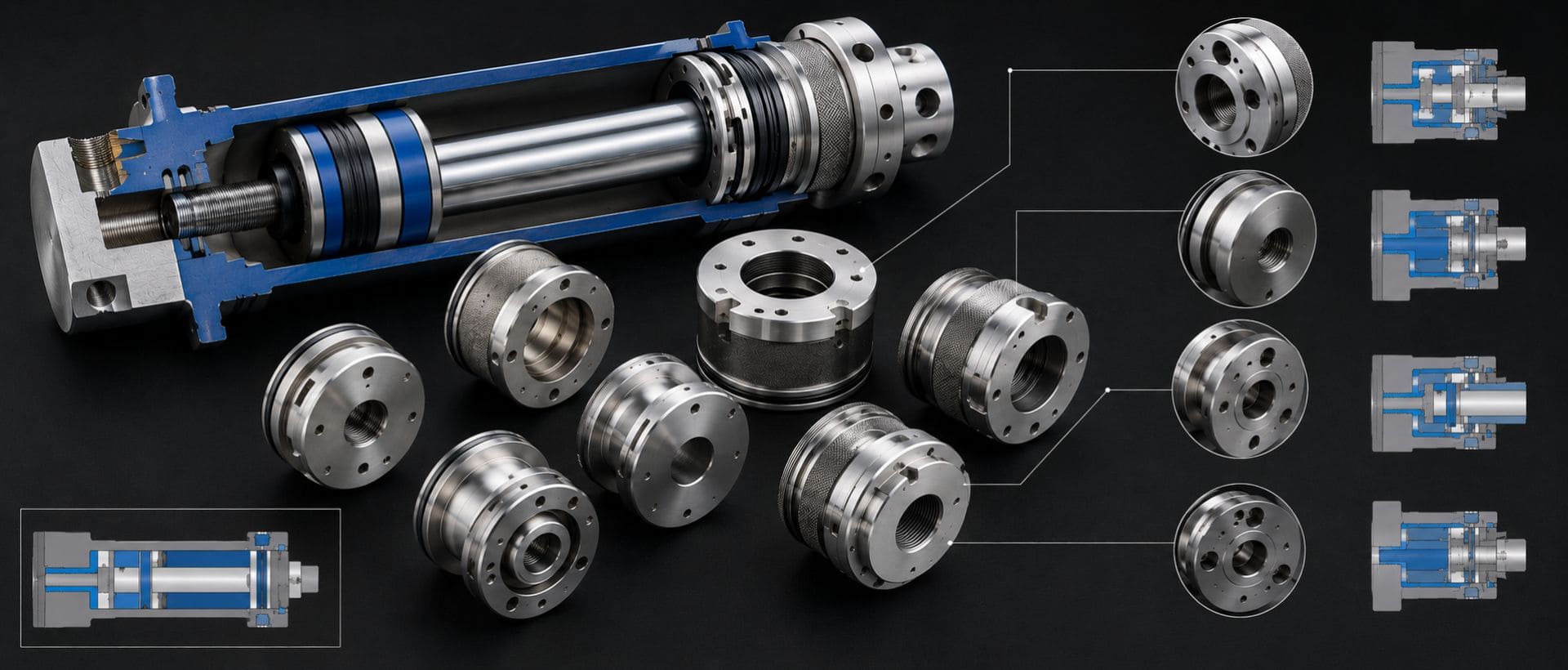
When working with hydraulics, dependability may have been established before the machine was built, because accuracy is critical in producing reliable components such as hydraulic cylinder heads. In this blog, we’ll look at the importance of properly machined hydraulic cylinder heads in minimizing potential problems.
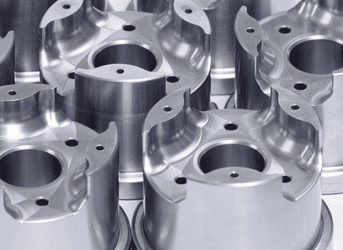
Hydraulic cylinder heads are the end caps that sit on the rod end of a hydraulic cylinder. Their primary function is to seal the cylinder, support the piston rod, and contribute to the hydraulic system’s pressure buildup. On top of that, the piston rod head functions as a guide for the rod, reducing any potential side stresses.
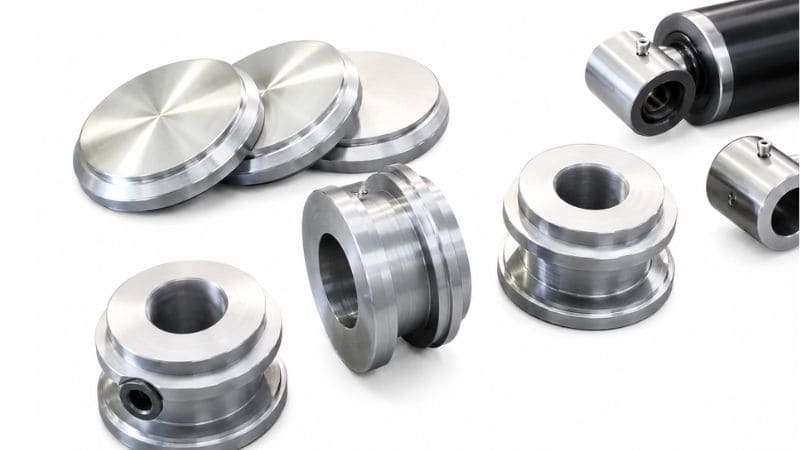
The main function of seals is to retain the hydraulic fluid inside the cylinder while preventing it from leaking into the surroundings. Most rod seals usually have operating pressures ranging from 3,000 to 5,000 PSI. The operating pressure in high-duty cylinders exceeds 7,000 PSI.
Retaining rings ensure that the component is fixed to the cylinder head. This helps to prevent the inner components from moving while the cylinder works. Spring steel retaining rings give tensile strength above 1,500 MPa, which makes them appropriate for high-load applications.
We use different types of retaining rings depending on cylinder size, load, and pressure requirements.
External Rings: Used to secure parts on the outside of a shaft.
Internal Rings: Keep parts secure in a bore or housing groove.
Wave Rings: Can help reduce vibration while maintaining constant pressure.
These are created for controlling the passage of the hydraulic fluid from and to the cylinder. Poorly designed ports might cause an increased loss of pressure of 10% to 20%, which makes them less efficient and leads to heating. Straight SAE, BSPP, and NPT tapered threads are used here.
This part helps link the hydraulic cylinder with the hydraulic hoses and tubes. The problem with improper fitting of the connections is considered one of the main reasons for leakage, causing up to 30% of hydraulic failures.
This component provides sufficient support for the piston rod. Proper guidance reduces seal wear by more than 40% and considerably increases the lifetime of the cylinder. We use bronze bushes for most applications, although composite and steel-backed guides are preferred for loads over 10 tons and/or at high speeds.
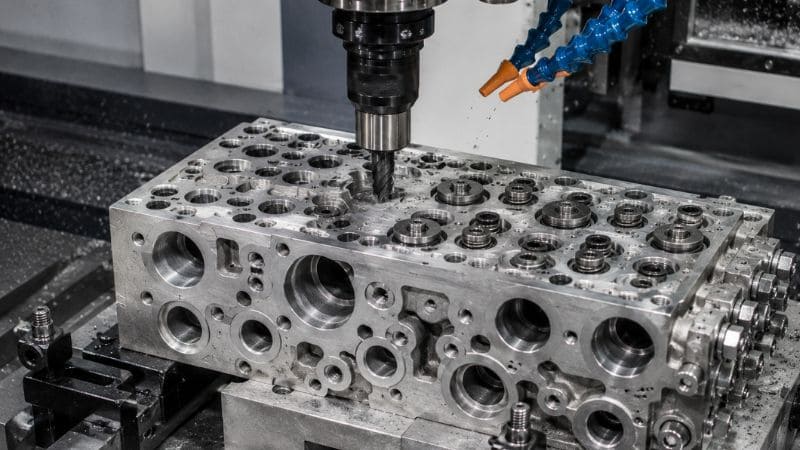
We follow a strict process in manufacturing hydraulic cylinder heads.
The first step in the manufacturing process is to choose the materials used to make the hydraulic cylinder heads, as this affects their durability and longevity. Based on our experience, we have discovered that poor material selection frequently results in premature degradation, corrosion, or pressure failure.
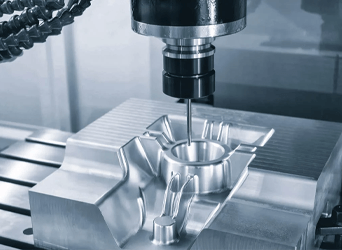
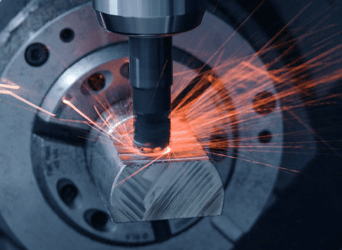
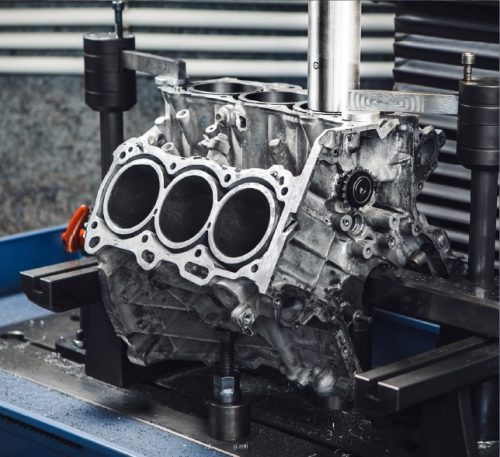
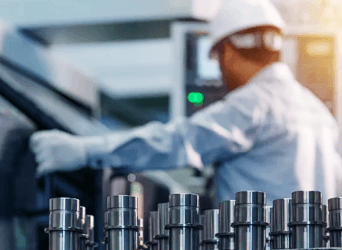
The CNC machining phase gives the hydraulic cylinder head its shape and functionality. We pre-machine the raw block to make it face and square. Next, we process the main body cavity, thread the hydraulic ports, create mounting surfaces, and machine the seal grooves. Finally, we will drill the ports, mill the relief grooves, and polish the surfaces.
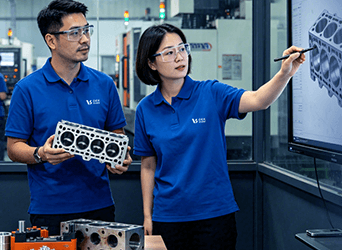
We consider quality control an active, continual process, woven through all manufacturing stages. Well-inspected quality control is just as important as perfect machining.
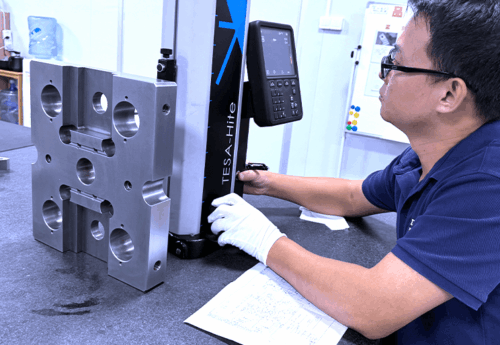
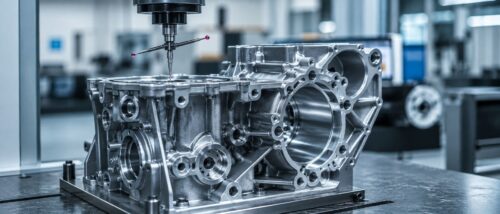
We use Coordinate Measuring Machines (CMM) to measure essential dimensions, analyze surface roughness on seal surfaces, and perform GD&T tests to ensure dimensional correctness. We also carried out hardness testing, chemical composition analysis, and structural integrity assessments.
Carbon Steel: We use carbon steel in standard hydraulic cylinder heads due to its high strength (400-550 MPa), ease of machining, and consistent performance in systems that operate at over 3,000 PSI but are cheaper than alternatives.
Stainless Steel: Stainless steel, particularly grades 304 and 316, is preferred for marine and chemical applications due to its improved corrosion resistance and durability, although the machining might cost 20-30% more.
Aluminum: We use this material in lightweight hydraulic systems because of its low weight (60% less than steel) and ease of machining, as well as its resistance to corrosion at lower pressures.
Ductile Iron: We use ductile iron in heavy-duty machinery because of its great abrasion resistance, vibration damping, and tensile strength of 450-700 MPa.
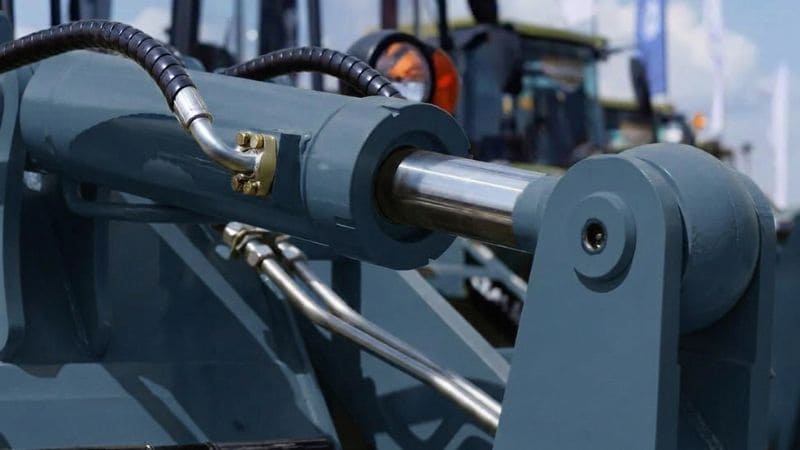
Some of our most common applications of hydraulic cylinder heads are:
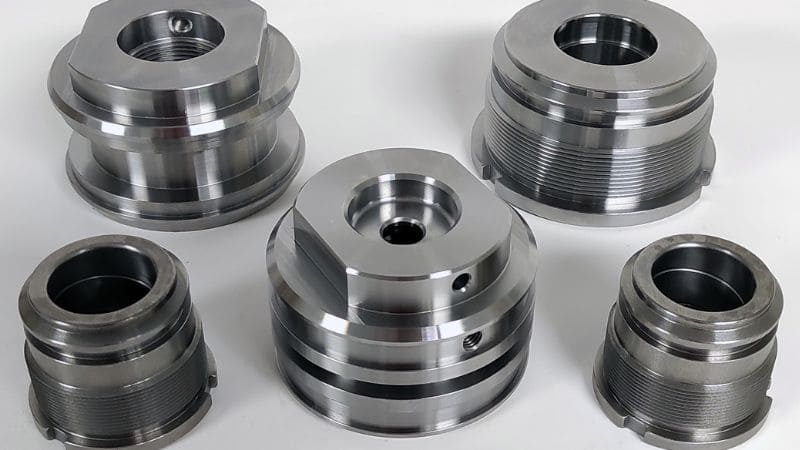
There are cases where seals fail due to poor tolerance of grooves or rough sealing surfaces. We avoid this problem by maintaining close tolerance and controlling the surface finish to Ra 0.4-0.8 μm.
The rod’s misalignment impacts wear uniformity, seal deterioration, and oil leakage. Cylinders have a shorter lifespan when their concentricity tolerance exceeds 0.02mm. We avoid this issue by implementing precision CNC machining and guiding bushing placement.
Cylinder heads may be damaged prematurely if the material used cannot withstand pressure above 25 MPa. We avoid premature failures of cylinder heads by using stronger materials such as 45# steel and 42CrMo.
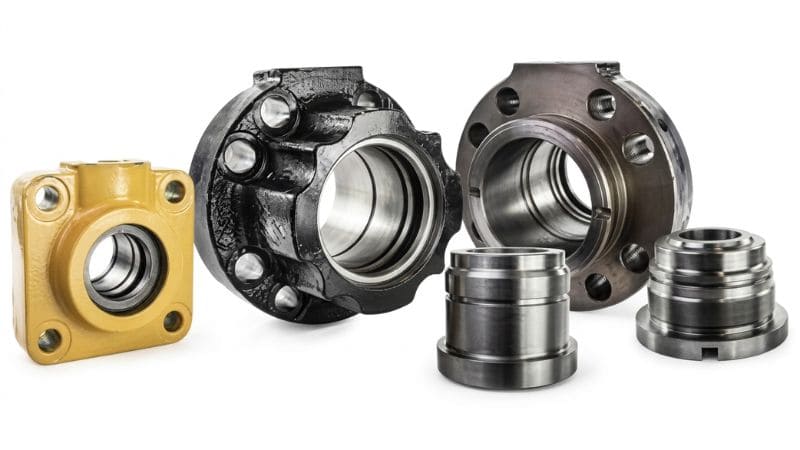
Most failures we’ve seen come from a poor fit. This is precisely why we start with compatibility testing first.
It must be ensured that:
We have observed that performance varies widely depending on the environmental conditions. That is why we always consider the following factors during selection.
As I have seen, normally, the cheapest option turns out to be the least cost-effective one.
Supplier reliability is highly important in hydraulic production to avoid problems in the future when using the equipment.
Once installed, the system needs proper maintenance to ensure its efficient performance.
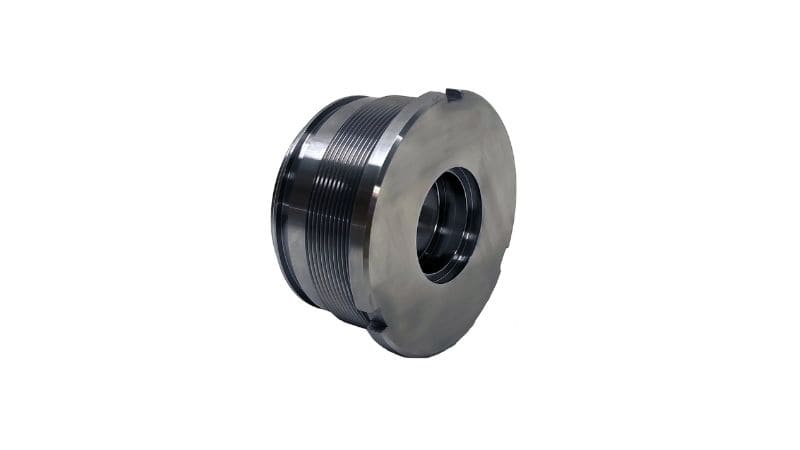
Many technological advances have been made in hydraulic cylinder heads. This is due to the fact that modern hydraulic cylinder heads are more resilient, clever, and efficient than before. High-end technology, such as alloys, composite materials, and surface treatments such as ceramics and DLC coatings, is utilized to improve durability and reduce weight. Sensors are installed to monitor variables such as pressure, temperature, position, and wear and tear.
We see quality assurance as an important part of our company since it helps to ensure that the hydraulic cylinder heads work as intended in an operational context. By providing early detection, we help to spot any problems before they become serious problems with the products.
Additionally, the most important feature is that we can guarantee that all of our goods will resist extreme operating circumstances.
In most cases, flaws such as low-quality machining and the lack of appropriate quality control lead to failure of hydraulic cylinder heads.
At AutoCNCParts, all our hydraulic cylinder heads are designed and manufactured to withstand extremely harsh working conditions, not just as per drawings. We offer superior CNC-machined parts that enable better sealing and greater pressure resistance, which increases the longevity of your machines. For a free quote, contact us today.
Kim oversees engineering operations, including complex CNC programming, DFM reviews, and solving challenges associated with high-precision automotive components. He specializes in strict tolerance control and multi-axis machining of complex geometries essential for powertrain modules, suspension systems, and ADAS sensor housings. Outside of work, he enjoys the precision and strategy of playing snooker.
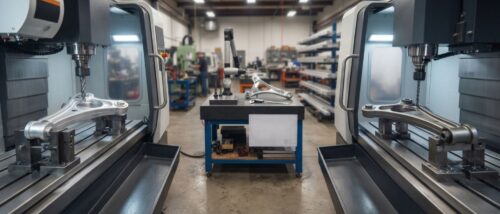
We integrate advanced machining, specialized materials, and surface finishing to deliver mission-critical parts that meet every rigorous automotive standard.
Fill out the form below and our team will get back to you promptly with a personalized quote tailored to your needs.