Ryan • Published 31 2026 Jul
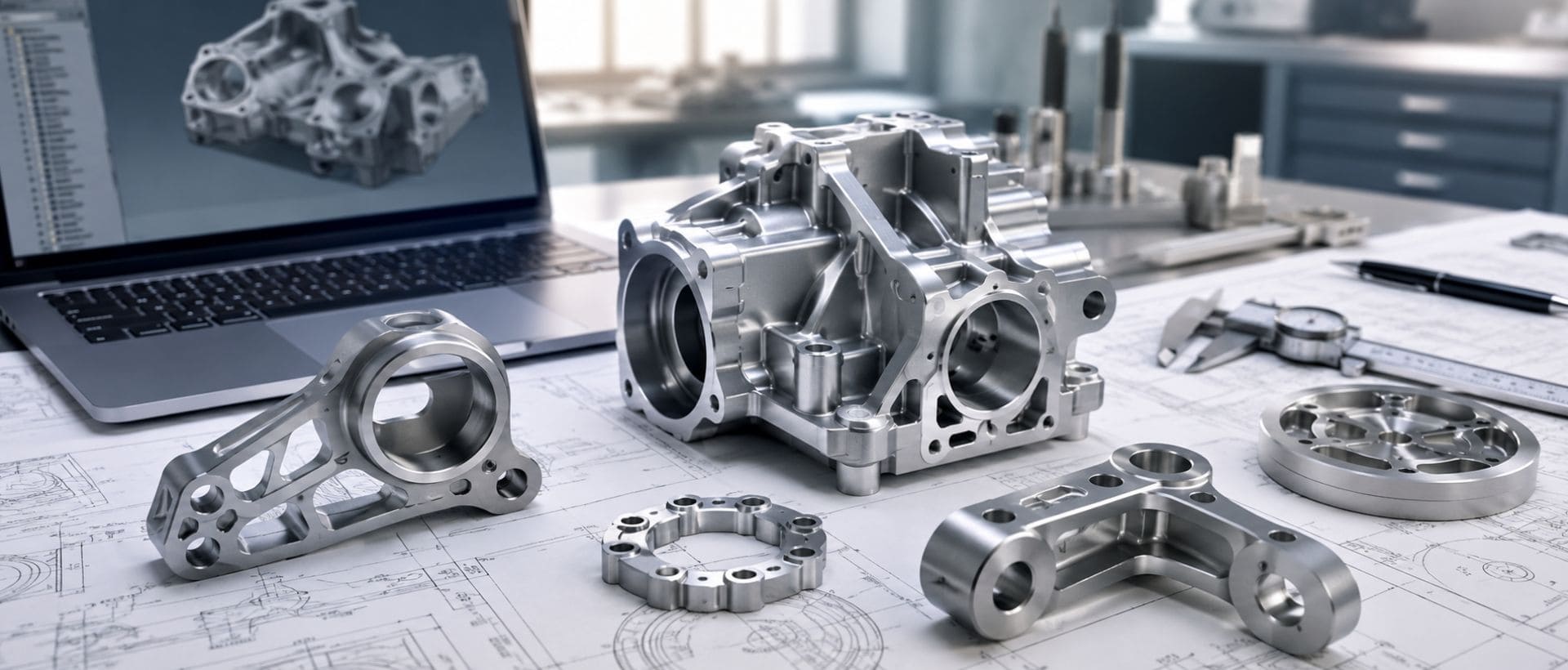
Good DFM practices help OEMs move fast from prototyping to mass production, reduce rework and delays, and eliminate unnecessary part complexity while ensuring they remain functional. Beyond that, it reduces production cost and makes machining easier. In this blog, we outline the top 5 tips to speed up your automotive CNC project.
This is an engineering strategy or approach that focuses on creating a better automotive component design so they are easy, fast, and cost-effective to produce.
In automotive CNC machining, tier suppliers and OEMs focus on using the right material, maintaining only required tolerances, and optimizing overall CAD designs so the parts can be effectively manufactured.
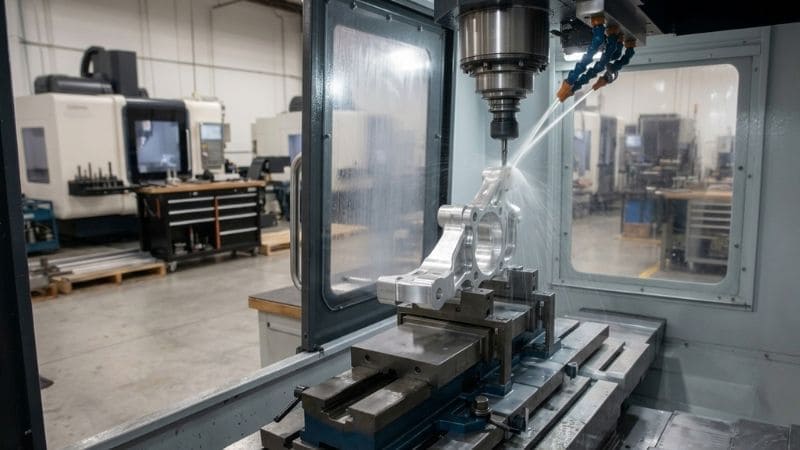
The first tip to consider is to select the right material, as it influences production cost, speed, and tool wear rate. Materials such as aluminum and brass machine better than stainless steel and titanium.
As such, faster cutting speeds and chip evacuation are more possible, which increases machining efficiency. For example, aluminum is popularly used for EV battery housing and motor enclosures due to its high machinability and low tool wear rate.
While tight tolerancing is important for critical safety and high-performance automotive components, it might not be required for non-mating and structural parts. Features like bearing boxes, sealing surfaces, datum references, etc might need high precision.
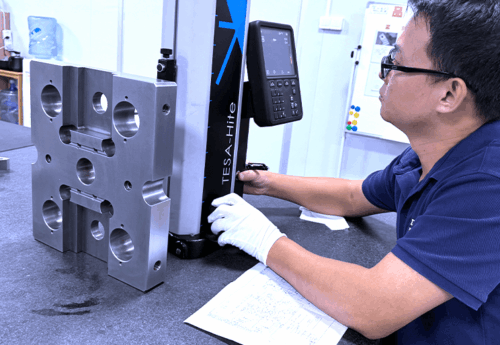
Beyond that, engineers must prevent tolerance stack-up so individual parts can assemble properly. With tighter tolerances comes more time requirement for CMM inspection, while a simple part might need only visual inspection or use of calipers.
When custom tooling is needed for auto part production, machining time and cost increase. A good DFM strategy prioritizes the use of standard tooling as much as possible.
For example, when designing holes and counterbores, using standard drill sizes eliminates the need for custom tools. DFM companies must also factor in cutter accessibility and fewer setup changes.
Deep pockets and complex internal features make CNC machining more challenging. Deep cavities require long cutting tools, which are usually flexible and prone to tool wear and deflection.
Moreover, it leads to dimensional inaccuracies and poor surface finish. With that, machinists must use the correct depth of cut and reduce feed per tooth.
Complex 3D curves and tiny inside corners increase machining and CAM programming time. Small fillets require small cutters, which makes production slow. Beyond that, they cause poor surface quality and often require post-processing.
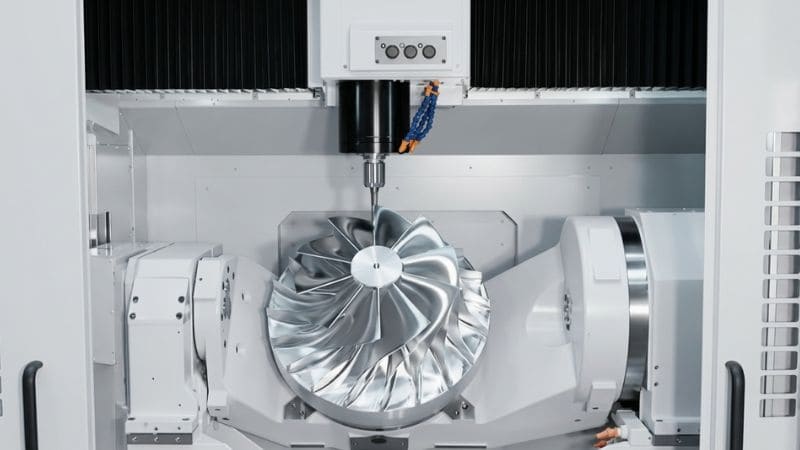
From very tight tolerances and unnecessary features to expensive and difficult-to-machine materials, overengineering increases tool wear, CAM complexity, and setup time.
Unnecessary decorative complex features should be eliminated. For example, logos and decorative patterns should be added to flat surfaces rather than deep pockets. Unless features are functional, they should be kept simple.
Finishing should also be applied only as necessary. Rather than using a mirror-like polishing finish of Ra 0.4 um on an internal feature that isn’t visible, using a Ra 3.2um would save machining and finishing time.
Poor fixture access causes unstable setups. Fixtures should securely hold parts without affecting the machining process. Ignoring this could lead to setup delays, part inconsistency, and high scrap rates.
Avoid dimensions, internal undercuts, or holes that cannot be easily inspected with CMM or other measuring tools.
Less complex geometry reduces programming and machine setup time. Moreover, machinists do not need to change setup multiple times. This leads to faster production cycles.
With fewer setup changes comes better dimensional accuracy, which eliminates rework and scrap. Moreover, simple designs reduce the risk of tool wear and breakage, and this prevents errors and mistakes.
DFM for automotive also helps ensure that quality components are produced consistently. By following the same strategy, process, and setup, etc, the same component batches can be produced several times.
Lower tool breakage rates and simple fixture setups keep the machine running as needed. This helps reduce cost per part. When there is repeated need for tool changes, machines remain unused.
Optimized part geometry with fewer complex features reduces the rate of tool wear and damage, thereby enhancing longevity.
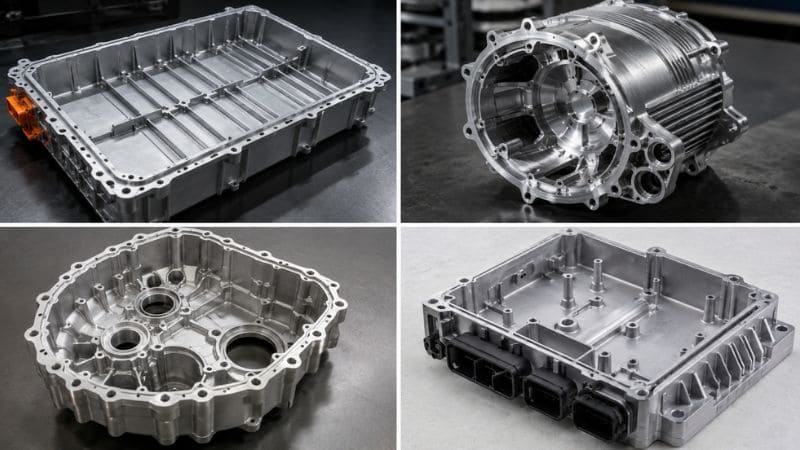
We once reviewed an EV battery enclosure for a customer, and it came with very narrow ribs that required the use of long tools.
With that, we widened the rib spacing by 5mm, and this reduced machining time by 16%. Tool vibration also decreased with a better chip removal rate.
An EV motor housing project included 85 mm deep cooling channels, which could likely cause tool deflection. After reviewing, we designed the channel to 60mm depth, and this improved machining stability, surface finish, and consistency.
Another gearbox required several 0.5mm internal corner radii, which suggested the need for small cutters. We optimized the radii to 3mm and used larger end mills. This reduced machining time by 20% while improving surface quality.
We also worked on an ECU housing that needs up to 5 machining setups because its side features, including mounting bosses and connector ports, will be difficult to reach. During DFM review, we reduced setups to 3 and reduced the required timing by 30%.
Many automotive CNC suppliers introduce DFM early in the product development process because of the following reasons.
PPAP and APQP require a stable and repeatable machining process and part quality. By identifying potential manufacturing issues early, suppliers can easily carry out their risk assessment and prevent quality approval delays.
Using DFM strategies also increases prototyping speed. Suppliers can improve efficiency by eliminating custom tooling and using the right materials, etc.; this allows them to move quickly from the CAD stage and reduces iterations.
A good DFM manufacturing process also eliminates dimensional inaccuracies, scrap rate, and rework, thereby preventing validation delays.
It also ensures a smooth transition from prototyping to mass production. Because design is already optimized for manufacturability, suppliers can easily scale up production without experiencing any unexpected major issues.
By following the right DFM strategies and tips as explained in the blog, manufacturers can improve production speed and efficiency, reduce scrap work and rework, and ensure component consistency.
DEK Automotive is a leading auto part manufacturing partner. We offer a comprehensive DFM review that ensures your smooth transition to mass production. From 3-axis CNC machines and 3D printing to advanced 5-axis CNC processes, we guarantee a fast lead time. Our material expertise and team of professionals help us deliver quality and precise components consistently throughout the world. Visit our website today.
Ryan oversees quality audits and advanced metrology for high-precision automotive machined parts. As an expert in First Article Inspection, CMM verification, and IATF 16949 standards, he ensures every milled and turned component is 100% reliable and ready for rigorous vehicle assembly testing.
We integrate advanced machining, specialized materials, and surface finishing to deliver mission-critical parts that meet every rigorous automotive standard.
Fill out the form below and our team will get back to you promptly with a personalized quote tailored to your needs.