Peter • Published 21 2026 May
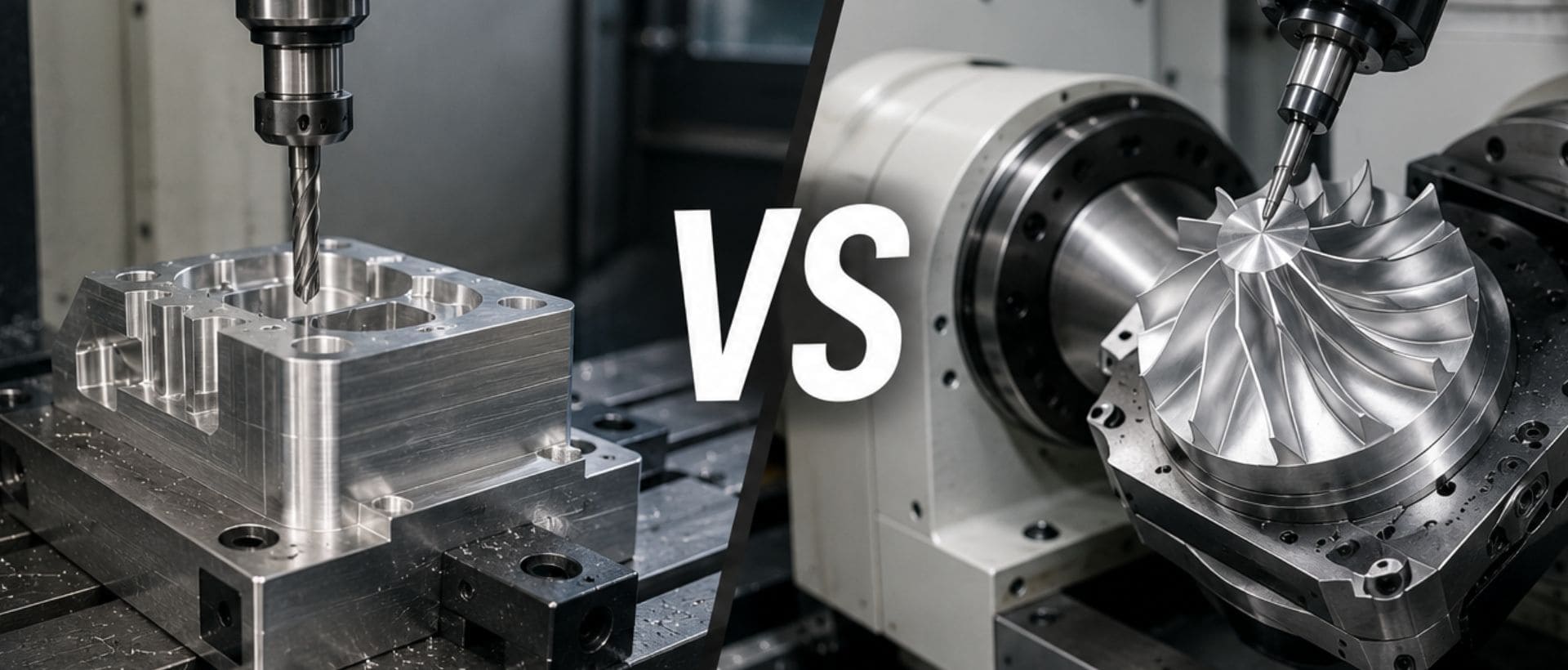
The automotive industry needs both basic and intricate design components. Choosing between 3-axis vs 5-axis CNC machining involves considering factors like tolerance requirement, part complexity, production speed, and lots more. In this article, we explain the advantages and limitations of both, how to choose the most applicable, and so on.
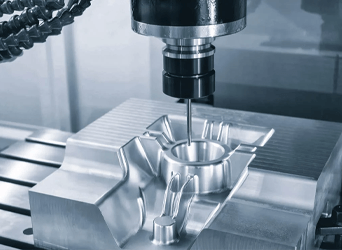
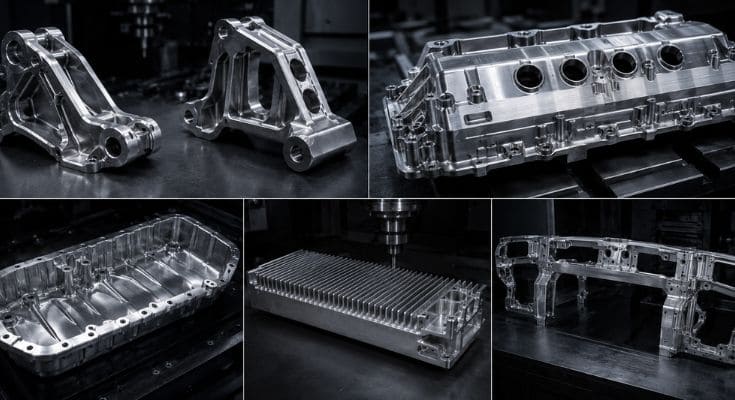
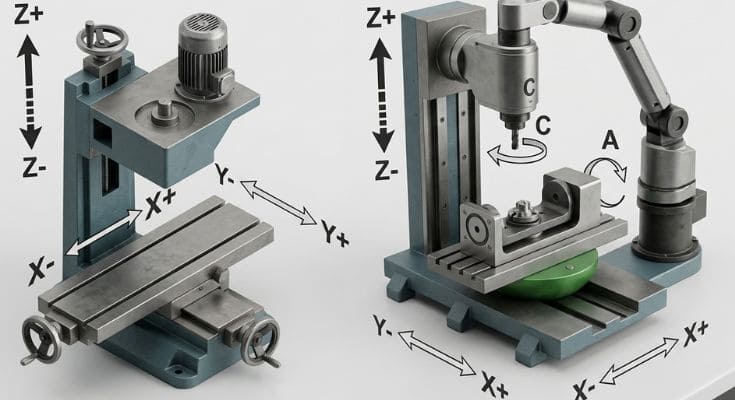
This is a subtractive manufacturing technique where a CNC moves the cutting tool along three linear axes, X, Y, and Z, in order to create the desired component.
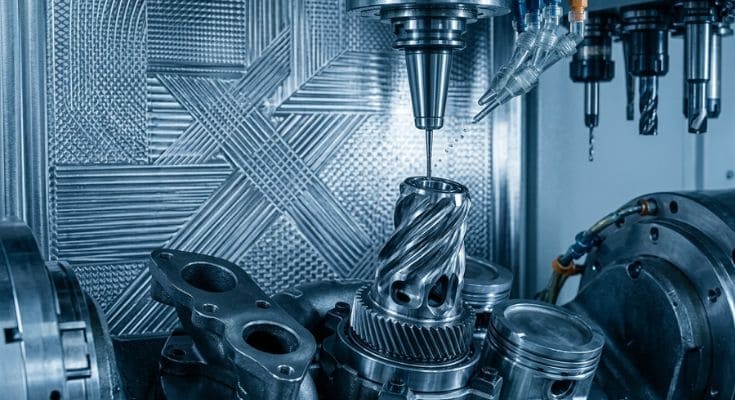
3-axis CNC machines are generally cheaper than 5-axis. Its simple design requires less expensive tools and software. Operational and maintenance costs are also minimal.
Setting up, programming, and operating a 3-axis system is easier and takes less time. This leads to quick production and delivery, particularly for simple components.
Since it is an effective method for basic components with 2D geometries, it can be used to produce multiple consistent batches while minimizing the time and cost spent.
When a part requires machining from different sides and angles, the technique might not be suitable. This is because repositioning might be needed, and this brings about more errors and misalignment.
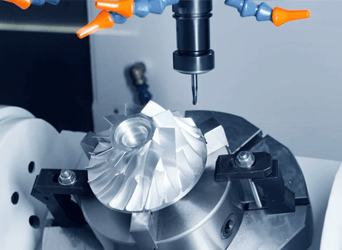
In this method, there are two additional rotational axes ( A and B or A and C) together with the three linear axes X, Y, and Z.
This allows the cutting tool to move along five different directions. As such, the process is used for complex engine parts, transmission systems, EV battery housings, etc
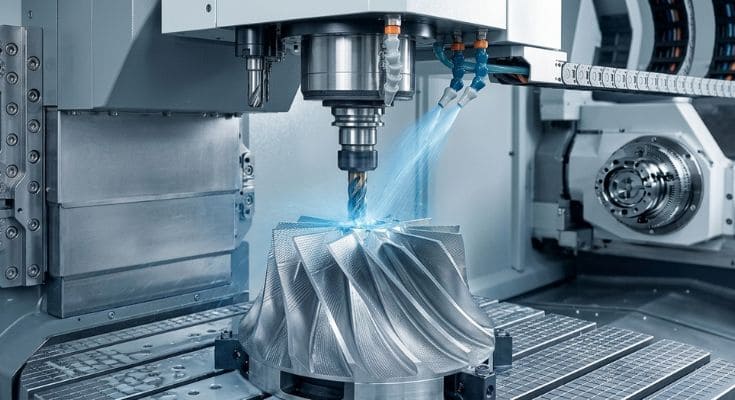
The 5-axis is most perfect for intricate design. From thin-walled and curved features to undercuts and so on, the method achieves complex geometries that are impossible with a 3-axis.
Accuracy and precision are possible here due to fewer setups. Beyond that, the machine can achieve up to 0.002mm, which is vital for high-performance automotive components.
During machining, the cutting tool is kept close to the workpiece so as to reduce vibration. This gives a smooth finish and reduces the need for further processing.
Although programming could take more time, once it’s done, setting up and repositioning is not usually needed. This eliminates errors that cause rework. Also, cutting from different directions reduces production time.
The major difference between 3-axis vs 5-axis CNC is the cost. 5-axis machines require high purchase and maintenance costs. Software used and skilled operators also make it more expensive.
Advanced programming expertise and software must be provided. Without this, errors can be introduced with tool wear and poor finishing.
Gearbox housing usually requires accurate alignment between its shafts, bearings, and mounting.
With 3-axis machining, this can be completed with 4 to 6 setups, whereas the other technique needs just one clamping. As such, a 5-axis ensures accuracy and part fit and reduces variation.
Suspension components are now designed with thin walls, curved, contoured, and lightweight features. The 5-axis method allows for these complex geometries while maintaining the strength of the parts.
The steering column part must be manufactured with high precision to ensure safety. As such, a 5-axis machine is perfect to enhance shaft alignment and create complex mounting interfaces.
When the automotive brackets have a simple design for prototyping, low volume, or custom production, 3-axis might be suitable. However, for lightweight complex angles and channel brackets, the other procedure is used.
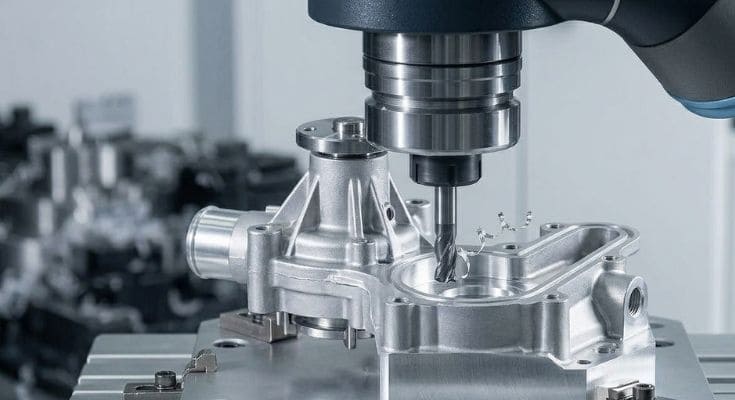
When it comes to prototyping for the automotive industry, 3-axis vs 5-axis CNC machining offers varying features and benefits.
5-axis CNC allows for quick iterations as engineers can move from the CAD file stage to the finished parts in a few hours. This is because the setup is limited.
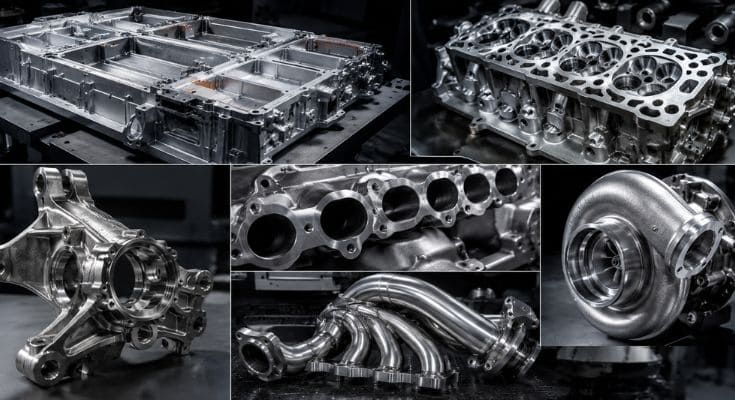
Many high-performance automotive components, like cylinder head ports, suspension knuckles, etc., must be made with high-grade materials like aluminum 7075 and titanium grade 5 for accurate functional testing. The 5-axis machine works well with this alloy without affecting its strength.
One major difference between 3-axis vs 5-axis is the use of jigs and fixtures. A 5-axis system reduces the need for that, as machining can be done from different angles.
Also, a 5-axis machine can achieve a surface roughness as low as 0.8 microns and even better. With that, the visual appearance is enhanced with little or no finishing process done.
| Features | 3 Axis CNC | 4 Axis CNC | 5 Axis CNC |
| Axis Movement | X, Y, and Z linear axes | X, Y, Z + A ( One rotational axis) | X, Y, Z + A, B ( rotational axes) |
| Surface Finish | Up to 1.6µm | Average of 0.8 µm | Up to 0.4uµm and better |
| Complexity level | Best for simple and flat auto parts | Suitable for moderately complex and cylindrical components | Suitable for complex geometries part |
| Applications | Oil pans, brackets, covers | Camshafts, gears, driveshafts | Impellers, manifolds, turbocharger housing, suspension knuckles. |
| Cost and Programming | Lowest cost with simple CAM | Moderate cost and CAM programme | The highest cost with advanced programming |
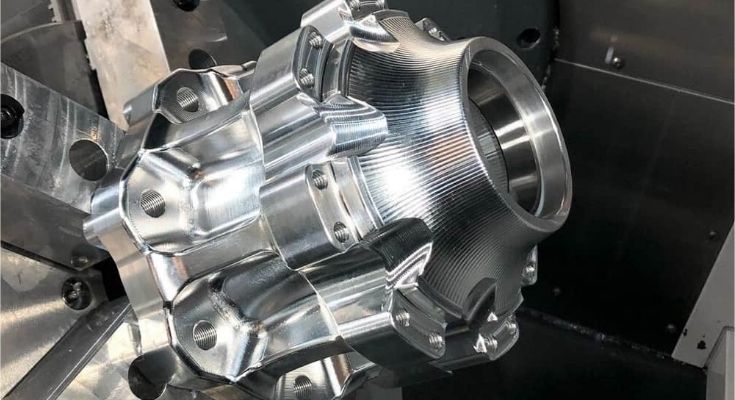
When the component involves flat and simple designs, a 3-axis is suitable. For contoured, curved, multi-angled, thin walls and other complex features, the other technique should be used.
If high-volume production is required, a multi-axis system works best as machining speed is high. Consistency is also ensured with a few errors. 3-axis CNC is compatible with simple, small batches.
For tight tolerance structures with up to 0.005mm and better, the 5-axis is perfect.
While a 3-axis machine is less expensive for basic components, a 5-axis CNC must be used when intricate features are involved. This reduces errors and rework, misalignment, and post-processing that could generate more cost.
While the 3-axis CNC process offers lower cost, less programming, and less setup, the 5-axis is perfect when tight tolerance, complex designs, and perfect surface finishing are required.
AutoCNCParts offers varying manufacturing processes from 3 and 5-axis CNC machining, injection molding, 3D printing, vacuum casting, and lots more. Whether you require a few autoparts or large volume batches, we deliver consistent and precise products worldwide. Our procedures follow strict inspection and quality control, and we ensure compliance with ISO 9001 and IATF 16949. Contact Us Today.
Peter leads the engineering team, bridging the gap between design concepts and functional machined parts. He specializes in optimizing DFM for subtractive manufacturing, ensuring complex components like EV motor housings and battery enclosures are optimized for high-speed milling. Outside work, he enjoys cycling and restoring vintage motorcycles.
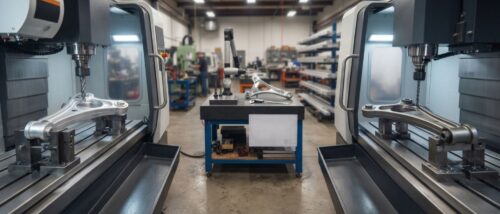
We integrate advanced machining, specialized materials, and surface finishing to deliver mission-critical parts that meet every rigorous automotive standard.
Fill out the form below and our team will get back to you promptly with a personalized quote tailored to your needs.