Kim • Published 13 2026 Aug
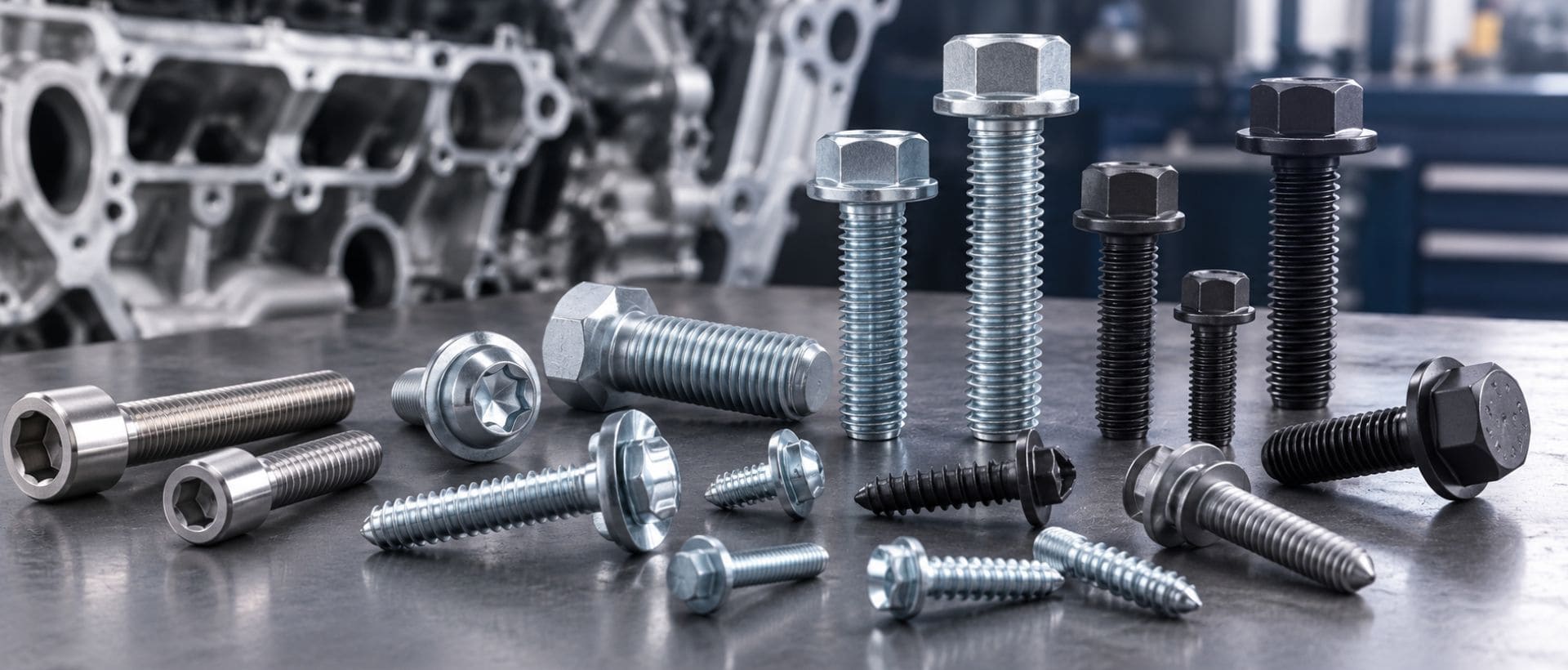
This blog covers automotive bolts and screws categories, manufacturing considerations, and practical methods to prevent them from loosening.
A bolt is a threaded fastener that connects two or more components using a matching nut. It makes a strong, removable connection for parts open to high loads or continuous vibration.
In automotive manufacturing, bolts are mostly applied to chassis modules, suspension systems, engines, and transmission components. They give a higher clamping force than most screws and simplify maintenance and replacement.
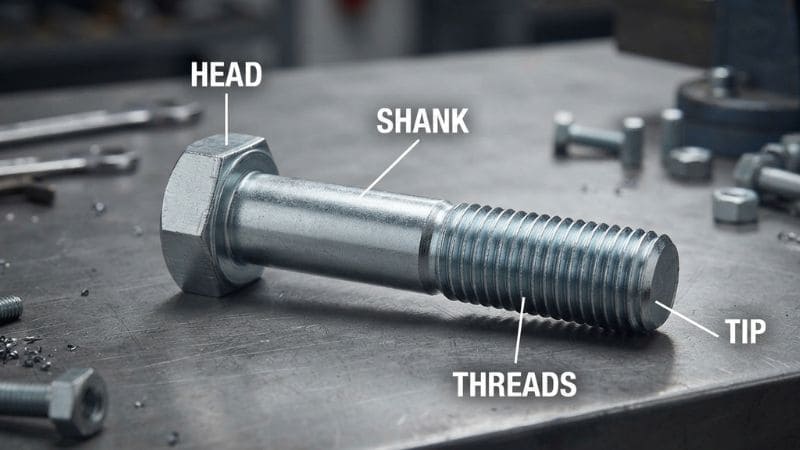
Every bolt consists of multiple key features that change its strength and performance, as given below:
Head: Gives the surface for using torque throughout the duration of fitting or removal. Hex, flange, socket, and carriage heads are specified according to the needed fastening application.
Shank: Located between the head and threaded section. It optimizes shear durability and helps to retain accurate alignment under load.
Threads: Makes the clamping force by connecting with a nut or a threaded hole. Thread pitch and profile influence gripping strength and vibration tolerance.
Tip: It is the end of the bolt that enters the nut or threaded hole first. Finishing the tip properly makes installation easier and protects the threads from damage.
A screw is a threaded fastener that forms or connects threads as it is driven into a material or threaded hole. Unlike bolts, multiple screws do not depend on a split nut.
Automotive screws are applied to trim panels, interior units, electronic modules, brackets, and sheet metal parts where fast installation and compact fastening are required.
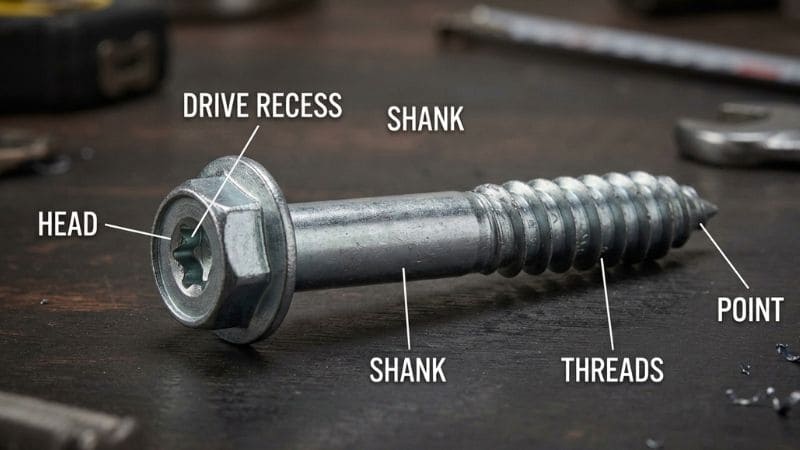
Although screw designs change, most automotive screws contain the following parts.
Head: Gives the surface on which the tightening torque is used during fitting or removal. The head design also decides which tool can be applied to support the screw.
Drive Recess: Created in the screw head, the drive recess supports the installation tool to connect safely. Choosing the accurate drive type decreases cam-out and boosts tightening consistency.
Shank: Located in the middle of the head and the threaded section, the shank holds alignment and gives additional resistance. Based on the application, it may be fully or partially threaded.
Threads: By connecting the material or a threaded hole, the threads generate the clamping force that retains components together. Their geometry directly modifies holding strength and installation performance.
Point: Developed to enter the material first, the point influences how easily the screw starts during installation. Self-tapping and self-drilling screws operate with specialized point designs to decrease or remove pre-drilling.
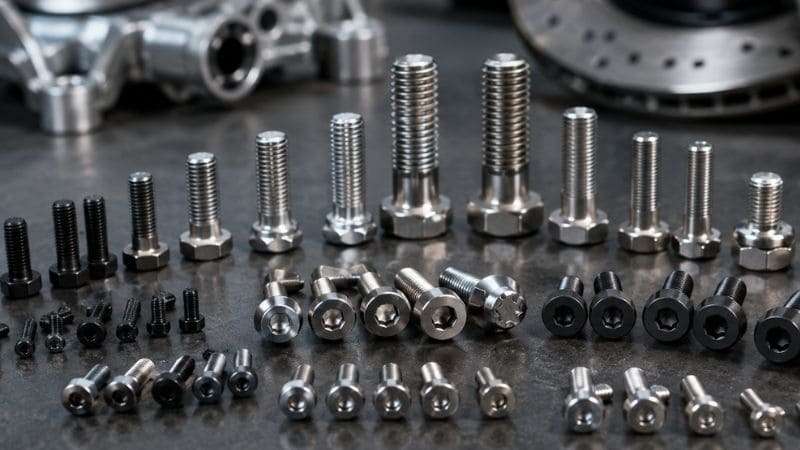
Automotive bolts and screws come in many designs to meet specific assembly and performance requirements. The right fastener should be selected according to the function, geometry and material for consistent fastening and long service life.
Applied in important load-bearing units, these fasteners stabilize components such as the chassis, suspension, and engine. They are created to survive high clamping forces, continuous vibration, and heavy mechanical loads.
Instead of depending on pre-cut threads, these fasteners cut mating threads as they are placed. They are commonly applied in sheet metal, plastic components, and lightweight automotive units to streamline production.
Created for pre-threaded holes or matching nuts, these fasteners give exact and reliable assembly. They are mainly used to attach brackets, housings, electrical components, and other precision parts.
Created for high tightening torque, these bolts make strong and reliable clamping joints. They are commonly operated in engine assemblies, suspension systems, and other high-load automotive applications
These bolts contain an integrated flange under the head that distributes the clamping load over a larger area. This design often removes the requirement for a separate washer.
A streamlined, rounded head integrated with a square neck that eliminates the bolt from turning during tightening. They are frequently specified when only one side of the assembly is available.
Containing a cylindrical head with an inner hex drive, these screws give high clamping strength in a limited installation space. They are commonly used in mechanical accuracy and automotive assemblies.
With their wide, rounded head, these screws distribute the load over a greater surface to reduce material damage. They are frequently applied to interior trim, electrical components, and thin metal panels.
Instead of depending on pre-cut threads, these screws create their own mating threads during installation. They reduce assembly complexity and are commonly applied to sheet metal and plastic components.
Unlike conventional fasteners, these screws stabilize one component directly against another without making use of a nut. They are commonly used with gears, pulleys, collars, and rotating shafts.
Known for its durability and affordability, it is mainly used to create automotive fasteners. Defensive coatings are usually added to optimize corrosion resistance in required service conditions.
By including elements such as chromium, alloy steel gets higher rigidity and better durability than standard carbon steel. It is mainly selected for heavily loaded automotive components.
Excellent corrosive chemicals create stainless steel ideal for extreme operating environments. It is commonly applied to exhaust systems, external components, and marine vehicles.
Offering an excellent lightweight strength ratio, titanium supports to decrease vehicle weight without compromising mechanical performance. It is used in motorsports and high-efficiency automotive applications.
Low density makes aluminum a feasible choice where weight decrease is more important than maximum durability. These fasteners are used in non-structural automotive units and lightweight components.
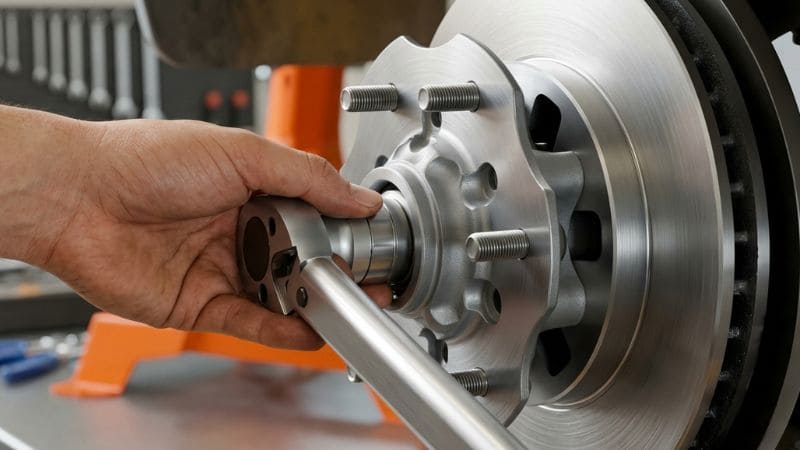
Automotive fasteners frequently work in rain, humidity, road salt, and chemicals. Without proper protection, corrosion reduces the fastener and decreases its service life.
Even a high-quality fastener can fail if it is not installed perfectly. Proper fastening technology supports maintaining the needed clamping force throughout the component’s service life.
Modern vehicles integrate steel, aluminum, magnesium, and composite materials. Each material reacts differently to load, temperature, and corrosion.
Screwlock inserts increase thread holding strength and improve resistance to vibration. They are mainly used in aluminum components or parts that need repeated assembly.
Washers distribute the clamping load over a larger area of the joint surface. They also prevent surface damage and maintain consistent preload.
Torque testing ensures that each fastener achieves the specified clamping force in assembly. The quality of assembly and the reliability of critical automotive components are improved by regular torque checks.
Selecting the accurate, trusted automotive bolts and screws increases joint strength, durability, and long-term vehicle reliability. Knowing about fastener types, materials, and installation techniques will help you make safer, more reliable automotive assemblies.
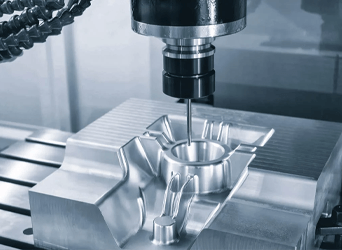
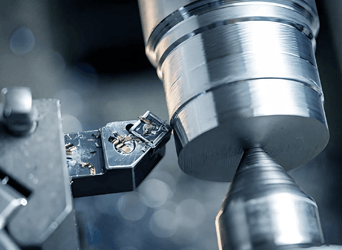
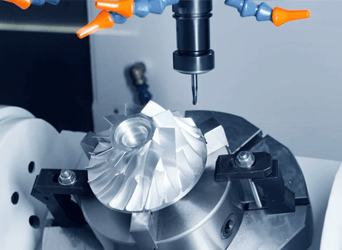
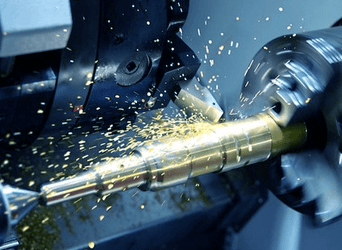
DEK specializes in accurate automotive manufacturing and provides detailed DFM feedback to optimize CNC milling, turning, and production efficiency. We can manufacture high-quality, reliable automotive components that meet the highest performance and industry standards. Contact us anytime to discuss your next automotive manufacturing project.
Kim oversees engineering operations, including complex CNC programming, DFM reviews, and solving challenges associated with high-precision automotive components. He specializes in strict tolerance control and multi-axis machining of complex geometries essential for powertrain modules, suspension systems, and ADAS sensor housings. Outside of work, he enjoys the precision and strategy of playing snooker.
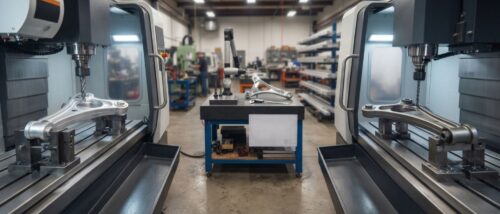
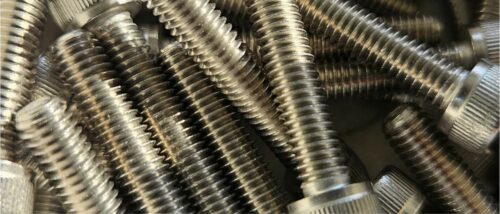
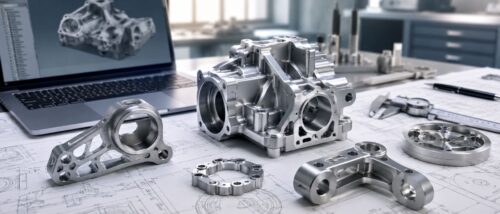
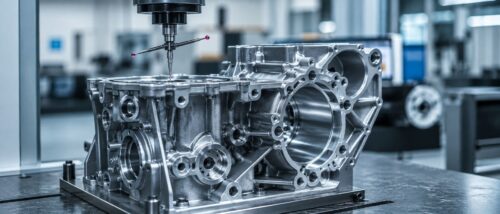
We integrate advanced machining, specialized materials, and surface finishing to deliver mission-critical parts that meet every rigorous automotive standard.
Fill out the form below and our team will get back to you promptly with a personalized quote tailored to your needs.