Peter • Published 28 2026 May
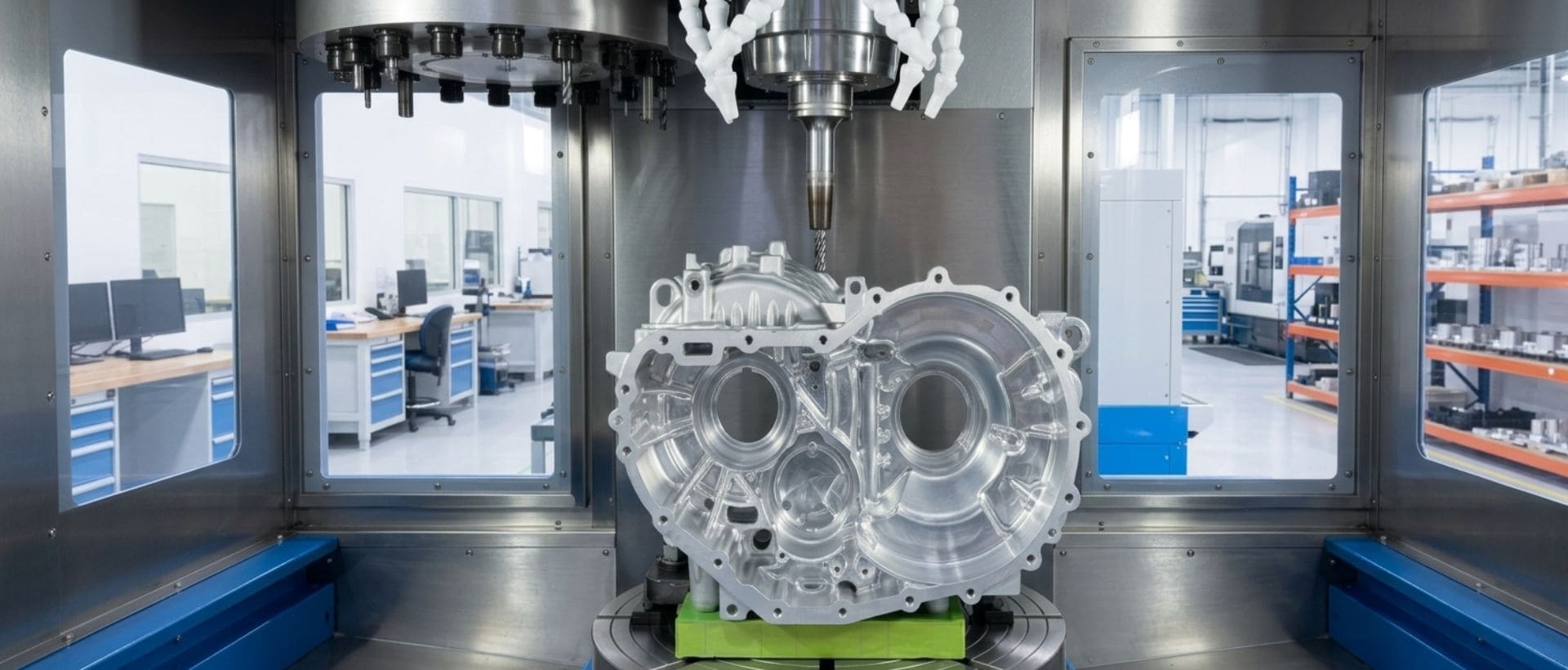
Production scope for this part is on our gearbox housing machining page.
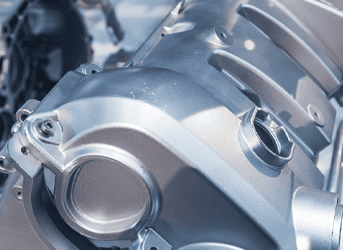
The machining of high performance gearbox housings is based on the management of the material and the corresponding dimensional tolerances. During the early phase of a project, getting it right avoids the structural distortions that wear on internal parts. By focusing on these variables, the casing is able to withstand stresses applied to it during operation.
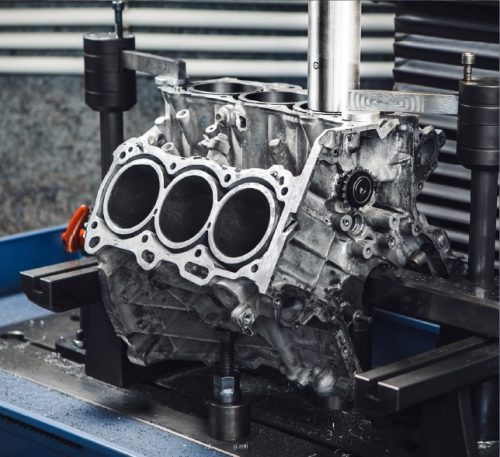
The process of machining a gearbox housing involves removing material from a casting or block to manufacture the enveloping casing of a transmission. The establishment of critical bearing seats, seal faces, and mounting points, which must position the shafts and gears when under load.
The gearbox housing must have very precise engineering tolerances to allow strong thermal expansion and vibrations without leaking oil, and while still being capable of carrying the design loads throughout the operational life of the drivetrain.
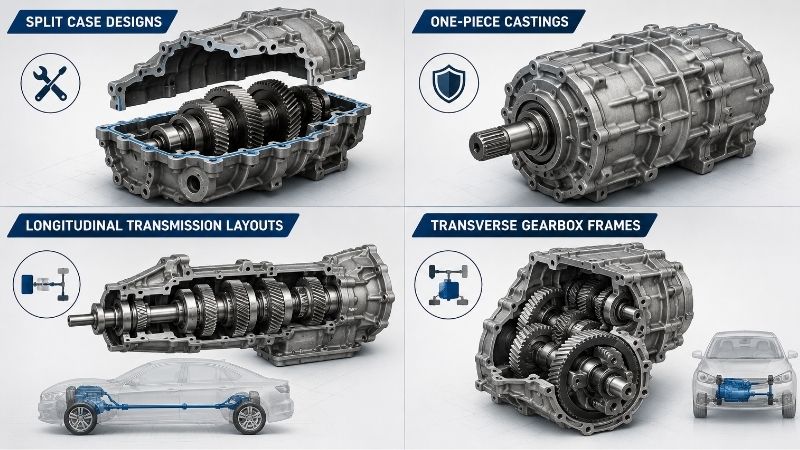
Split case housings are constructed in two halves so that the assembly and maintenance of internal shafts and bearings are easier and trouble-free. Because this design eases access for repairs, it requires precision-machined mating surfaces and a reliable seal to prevent leakage of fluid under pressure.
Monolithic housings or one-piece housings are the most rigid structural design, offering the least probability of leakage. This is due to the absence of the primary split seam. Despite being challenging to internally service, these designs facilitate high torsional stiffness for compact and high torque applications.
In longitudinal layouts, the vehicle’s housing is parallel to its length, generally transmitting power through the front engine to the rear wheels. These frames are designed such that elongated inline gear sets can fit in the frames, and they must manage the axial stresses specific to RWD or AWD.
Transverse housings offer space savings by being oriented perpendicular to the direction of travel and fitting within the width of the engine bay. These frames usually place the differential inside the main housing, which leads to complex internal shapes to support the gear train and the final drive.
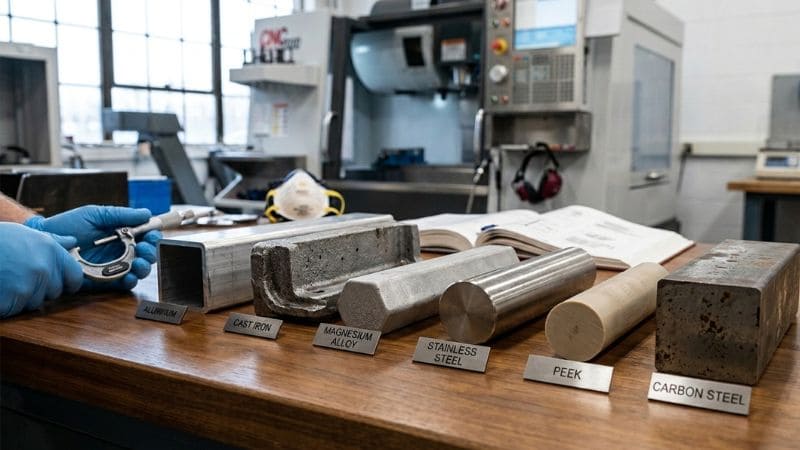
Aluminum is chosen for its strong strength-to-weight ratio and good thermal conductivity, which helps with heat dissipation during high-speed operation. Due to its superior machinability, users can manufacture complex geometries, while the high coefficient of thermal expansion requires effective compensation.
Grey cast iron (also called ductile cast iron) offers exceptional vibration damping and high compressive strength, making it suitable for a heavy-duty industrial gearbox. The material stabilization ensures the critical bearing bores are aligned under extreme mechanical loads.
Magnesium alloys are selected primarily for their low weight benefit and are much lighter than aluminum alloys. Despite its tendency to corrode galvanically, the high reactivity and low stiffness of magnesium require special machining parameters.
Corrosion-resistant stainless steel is used for housing that carries inside the pump, which meets hygiene and chemical resistance requirements. Though it is very durable, its work-hardening properties require tough tooling and lower cutting speeds to maintain dimensional accuracy.
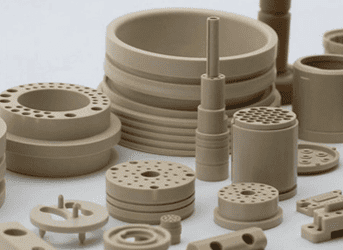
PEEK material is a high-performance thermoplastic polymer that is used for lightweight non-conductive housings. These housings need to resist chemicals and high temperatures. It is frequently machined for unique aerospace or medical applications.
Carbon steel is selected as the material for housings that need a high degree of toughness and can be hardened for wear. It is an economical solution for structural integrity, but usually needs outside treatment or painting to prevent oxidation when used outdoors.
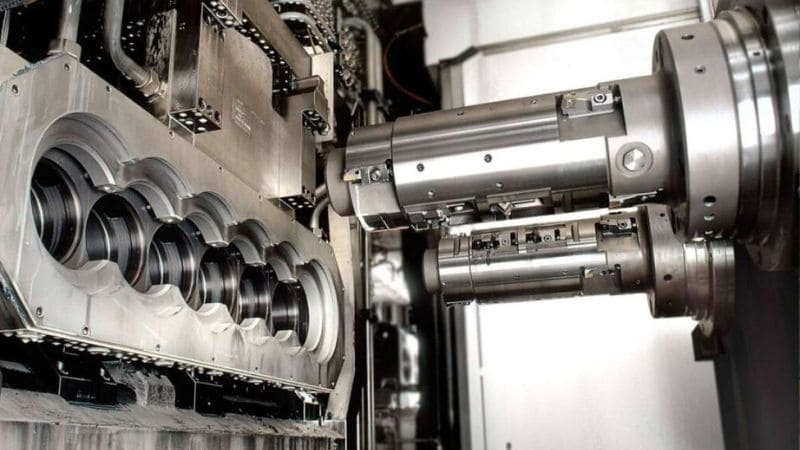
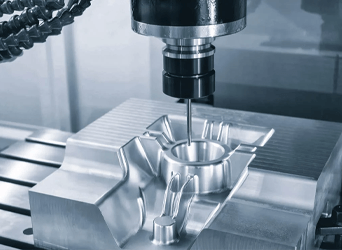
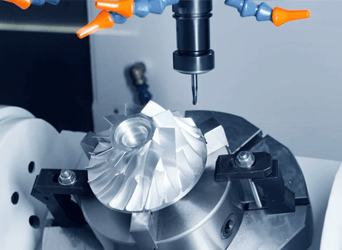
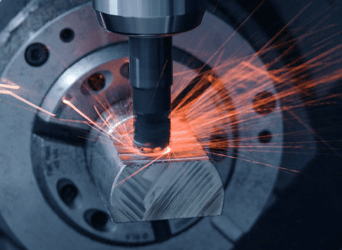
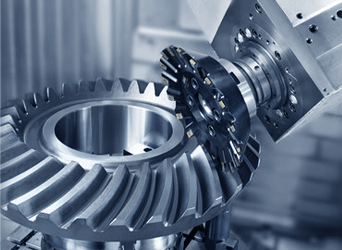
This process is vital for creating complex inside shapes and spherical mounting surfaces in the same setup to reduce relocation errors. When the workpiece can be manipulated by five continuous axes, the tolerance stacking problems due to multiple fixtures are avoided. This procedure ensures that the bores and mating surfaces have the necessary geometric relationship for perfect component matching.
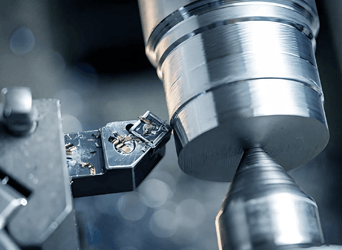
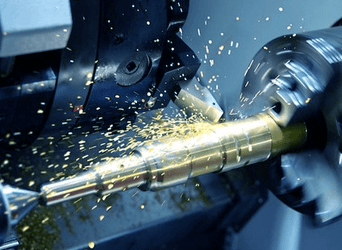
Turning is used to obtain the main concentricity of cylindrical parts and the exact dimensions of essential bearing seats. We use rigid spindle control with custom boring bars to achieve surface finishes for interference fits and fluid seals. For preventing shaft vibration and the internal mechanism’s steady long-term performance, tight radial dimensions are essential.
In places where complete flatness is essential for preventing high-pressure fluid bypass, surface grinding is utilized. Though milling also provides this function, it is not always effective in achieving the necessary planarity, so a second operation is often performed to counteract slight thermal distortions caused during the removal of bulk material.
The power of automated cycles delivers the high-strength fastening points and lubrication channels needed for housing assembly and cooling integration. Accurate control of thread pitch and thread depth is crucial to avoid fastener loosening in case of high cyclic loading and vibration associated with industrial gear drives.
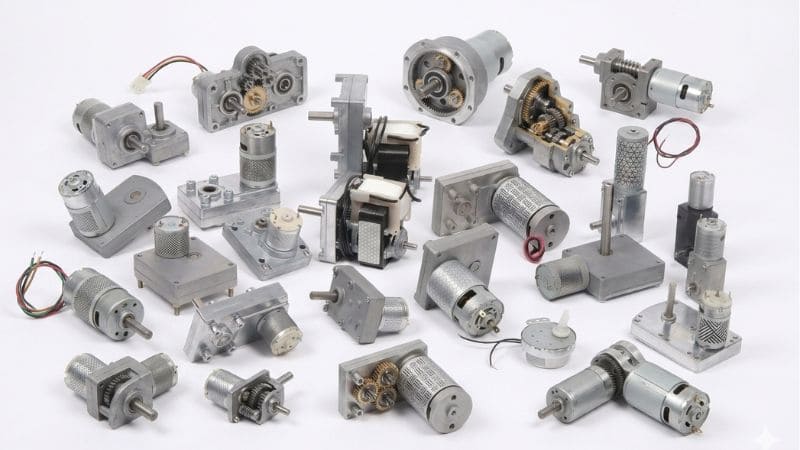
For uniform gear mesh and for preventing localized loading of the gear teeth, it is essential to align the input shaft and output shaft precisely. The internal transmission parts will get worn off, make noise, and heat a lot if the shaft parallelism is off a little bit.
The interference fit to be used to prevent the outer race from rotating in the housing and allowing for thermal expansion is determined by the diametrical accuracy of the bearing seats. Keeping the roundness and cylindricity of these bores under sub-micron levels is essential so that bearings do not displace under high radial and axial loads.
Flats to the flanges are machined to very high precision to ensure a uniform seal and prevent distortion of the housing when bolts are torqued to specification. When elements deviate from being flat, it can create leak paths for lubricants or lead to stress concentrations that may compromise the integrity of the entire housing.
Maintaining uniform structural features across housings for modular assembly is essential to consistent high-volume production runs. With this level of repeatability, we can virtually eliminate custom shimming and ensure that replacement parts meet the same exacting performance as the originals.
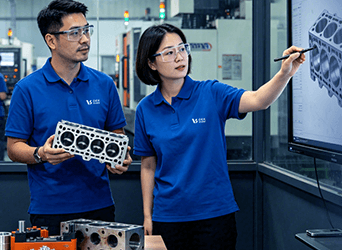
Geometric Dimensioning and Tolerancing refers to the acceptable allowable variation in form, orientation, and location of a feature. Using controls such as position, perpendicularity, and runout, we more effectively communicate the complex functional relationships of the housing features than with traditional coordinate dimensioning.
By improving the surface texture, microscopic friction is reduced, which gives rise to unwanted high-frequency resonance of internal mounting faces and bearing bores. An improved finish creates more consistent contact patches, which curbs the micro-vibrations that could be amplified by the housing and become audible at speed.
Break up standing sound waves by adding specialized ribbing and non-symmetrical wall contours so that they do not resonate in the housing. Including a variation in the thickness of the gearbox housing, the acoustic paths are broken, and the gearbox does not behave like a hollow resonator for gear-mesh frequencies.
Making the housing wall stiffer reduces the elastic deformation of interior components involved in the peak torque load transfer. The stiff structures manage to contain the mechanical energy in the material. As a result, it absorbs the vibration rather than transferring it to the machine frame.
The machined tolerances of the housing are designed to shift the natural frequencies of the housing away from the operating rpm range of the gear set. This targeted way allows no enhancement of vibration; resonance would multiply the amplitude, keeping the assembly quiet over the whole operational bandwidth.
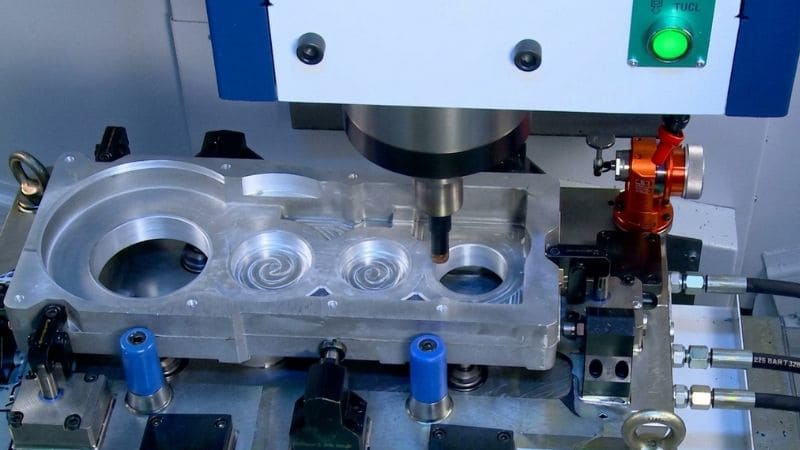
You can provide diamond coatings to non-ferrous alloys. The edges stay sharp for long cycles, ensuring consistency in surface finish and dimensional control in production.
The deep bearing seats require a low stiffness component like their seal ring. The bars are capable of effectively damping vibration to micron-level roundness necessary for high-speed applications.
When RPM is increased, the user can feed faster with low user forces. This prevents thermal transfer and metallurgical shifts, which could affect the dimensional accuracy of thin-walled housings.
These tools enable quick exchange and standardized offsets for quick turnaround. These deliver the necessary rigidity and repeatability required to ensure stability during complex machining operations.
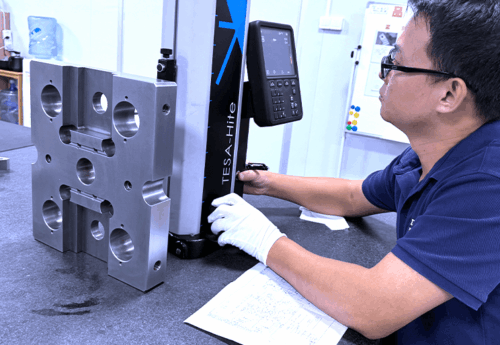
The geometric positioning pertaining to bores and surfaces is verified with the aid of a CMM system. This makes sure all major housing features have a dimensional tolerance.
Profilometers assess the tiny high and low features of a surface that come into contact with another surface, as on a bearing seat. The provided information certifies that the finishes are compatible and compliant with friction and sealing requirements.
They apply pressure to the housing to check for any porosities or machining defects on the housing walls. This ensures that the unit remains oil-tight under terrible operational conditions.
The complete house has been verified against all engineering specifications. It is the final test to ensure correct dimensions and structural integrity.
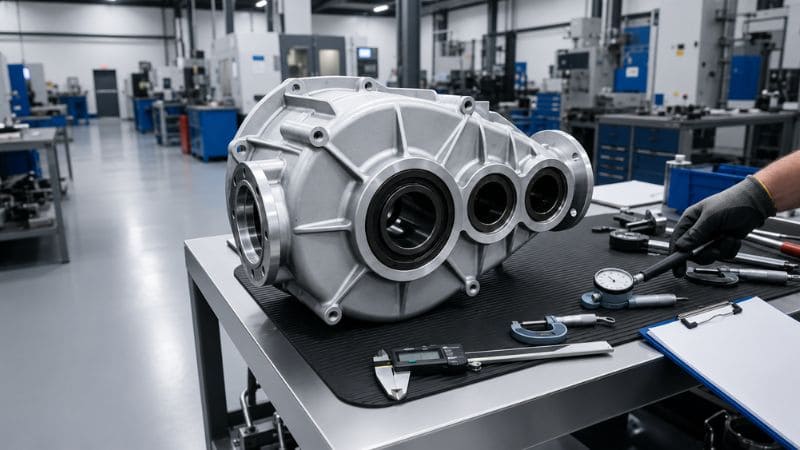
Real-time spindle feedback is analyzed using machine learning algorithms to dynamically adjust the tool path to reduce tool wear and thermal dynamic deflection. Precisely adjusting the tool paths, it helps in achieving the highest possible material removal rates while respecting the housing’s geometric tolerances and shortening cycle times for complex architectures.
Joining directed energy deposition and CNC milling enables localized strengthening of critical housing areas under stress. The construction of internal cooling channels or attached ribs, which cannot be cast, becomes possible through the application of this method, which significantly improves the cooling effect of the housing.
On-board optical metrology allows in-process measurement and confirmation of the geometric appearance of the housing without removing it from the fixture. The controller can directly determine offsets from the data these sensors have.
Simulation of the machining environment in the virtual world predicts the response of the housing to cutting forces and heat before the first chip is removed. This model determines vibration harmonics or structural shifts during this simulated event, allowing engineers to realize optimal parameters.
Precision machining of gearbox housings ensures the durability of drivetrains. Through mastering rigid architectures and tight tolerances, we eliminate the vibration resonance and fluid leaks that cripple high-performance systems.
Simply machining is not enough for vital transmission parts. If you need structural integrity or thermal stability, AutoCNCParts provides a framework and required accessories that possess tolerance in compliance with exacting specifications. Get in touch with us today to ensure uncompromising quality for your engineering needs.
Peter leads the engineering team, bridging the gap between design concepts and functional machined parts. He specializes in optimizing DFM for subtractive manufacturing, ensuring complex components like EV motor housings and battery enclosures are optimized for high-speed milling. Outside work, he enjoys cycling and restoring vintage motorcycles.
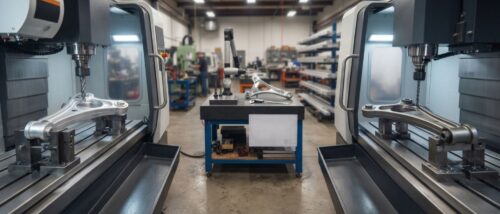
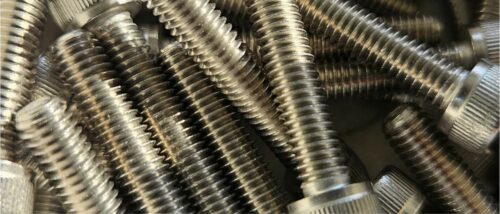
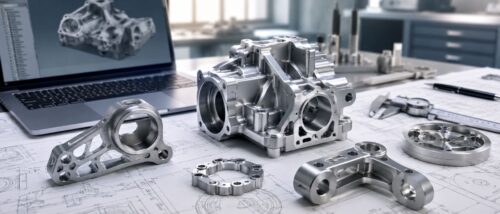
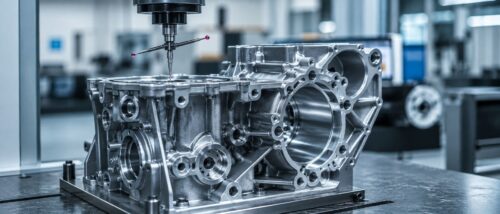
We integrate advanced machining, specialized materials, and surface finishing to deliver mission-critical parts that meet every rigorous automotive standard.
Fill out the form below and our team will get back to you promptly with a personalized quote tailored to your needs.